:+86 15106109009
:sales@couplingzy.com

 pl
pl


Stabilność metalowych złączek elastycznych w środowiskach o ekstremalnych temperaturach
Złącza elastyczne metalowe zajmują odrębną pozycję w przenoszeniu mocy mechanicznej: w przeciwieństwie do sprzęgieł elastycznych na bazie polimerów, których działanie jest ściśle powiązane z wąskim oknem termicznym, sprzęgła elastyczne metalowe uzyskują swoją podatność na podstawie kontrolowanego odkształcenia elementów metalowych — sprężyn talerzowych, resorów płytkowych, membran, mieszków lub zgięć serpentynowych. Ta całkowicie metalowa konstrukcja zapewnia im podstawową przewagę termiczną. Jednakże ekstremalne temperatury nakładają złożone i często konkurencyjne wymagania dotyczące właściwości materiału, stabilności wymiarowej, zachowania zmęczeniowego i stanu powierzchni. Zrozumienie, w jaki sposób metalowe sprzęgła elastyczne odpowiadają na te wymagania, jest niezbędne dla inżynierów określających układy napędowe w przemyśle lotniczym, przetwórstwie kriogenicznym, produkcji stali, turbinach gazowych i wszelkich zastosowaniach, w których warunki otoczenia znacznie odbiegają od standardowych warunków projektowych w temperaturze pokojowej.
Co definiuje metalowe sprzęgło elastyczne
Metalowe sprzęgło elastyczne przenosi moment obrotowy pomiędzy wałem napędowym a wałem napędzanym poprzez elastyczne odkształcenie jednego lub większej liczby metalowych elastycznych elementów, a nie poprzez sztywny kontakt mechaniczny lub wkładkę polimerową. Element elastyczny spełnia jednocześnie trzy funkcje: przenosi przenoszony moment obrotowy, kompensuje względną niewspółosiowość wału poprzez kontrolowane zginanie i zapewnia stopień podatności na skręcanie, który filtruje wahania prędkości i tłumi obciążenie dynamiczne.
Główne rodziny metalowych sprzęgieł elastycznych spotykane w praktyce przemysłowej i lotniczej to:
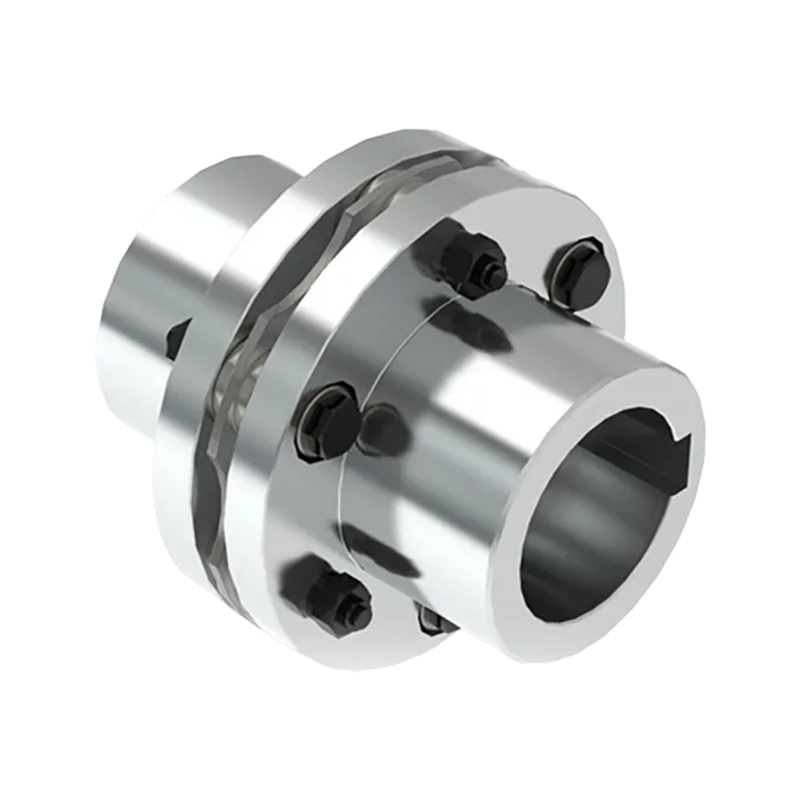
- Sprzęgła tarczowe: Cienkie okrągłe laminowane tarcze, zwykle ze stali nierdzewnej lub stopu utwardzanego wydzieleniowo, przykręcane na przemian do kołnierzy napędzających i napędzanych. W pakiecie dysków występuje zginanie, ponieważ kompensuje ono niewspółosiowość kątową i osiową.
- Sprzęgła membranowe: Jedna lub więcej wyprofilowanych membran pierścieniowych, często ze stopu tytanu lub stali wysokostopowej, które wyginają się, aby skompensować niewspółosiowość, jednocześnie przenosząc wysoki moment obrotowy przy bardzo niskim luzie. Szeroko stosowany w maszynach turbinowych i szybkich układach sprężarek.
- Sprzęgła mieszkowe: Cienkościenna, falista rura metalowa — zwykle austenityczna stal nierdzewna lub Inconel — zapewniająca sztywność skrętną w celu przenoszenia momentu obrotowego, podczas zginania osiowego i bocznego w celu kompensacji niewspółosiowości. Powszechne w zastosowaniach precyzyjnych serwomechanizmów i enkoderów.
- Sprzęgła resorowe (serpentynowe): Sinusoidalne lub serpentynowe paski metalowe przełożone pomiędzy dwoma kołnierzami piasty. Paski sprężynowe uginają się pod obciążeniem, zapewniając podatność na skręcanie i kompensację niewspółosiowości.
Wszystkie te konstrukcje mają wspólną cechę charakterystyczną: ich działanie zależy od mechanicznego zachowania metalicznego elastycznego elementu – zależność, która sprawia, że zmiany właściwości materiału wywołane temperaturą stanowią główny problem w zastosowaniach w ekstremalnych warunkach.
Efekty termiczne na metalowych elementach elastycznych
Temperatura wpływa na zachowanie metalowego sprzęgła elastycznego poprzez kilka jednoczesnych i oddziałujących na siebie mechanizmów. Zrozumienie każdego mechanizmu z osobna jest warunkiem wstępnym oceny ogólnej stabilności sprzęgła w szerokim zakresie temperatur.
Zmiany modułu sprężystości
Moduł sprężystości metalu — stosunek naprężenia do odkształcenia w liniowym obszarze sprężystym — zmniejsza się wraz ze wzrostem temperatury i rośnie wraz ze spadkiem temperatury. W przypadku austenitycznych stali nierdzewnych powszechnie stosowanych w sprzęgłach tarczowych i mieszkowych moduł sprężystości w temperaturze 500°C wynosi zazwyczaj 15–18% niższy niż w temperaturze pokojowej, natomiast w temperaturze –200°C może być o 10–12% wyższa. To przesunięcie wpływa bezpośrednio na sztywność skrętną sprzęgła: pakiet tarcz lub membrana, który zapewnia określoną sztywność kątową w temperaturze 20°C, będzie mierzalnie bardziej miękki w podwyższonej temperaturze i sztywniejszy w pracy kriogenicznej.
Praktyczną konsekwencją jest przesunięcie częstotliwości drgań własnych układu napędowego. Jeśli system został dostrojony w temperaturze pokojowej, aby jego częstotliwość rezonansowa znajdowała się w bezpiecznej odległości od roboczych częstotliwości wzbudzenia, znaczna zmiana modułu w temperaturze roboczej może zbliżyć rezonans do prędkości roboczej, co może mieć potencjalnie szkodliwe konsekwencje. Korekcja termiczna obliczeń częstotliwości drgań własnych jest zatem obowiązkowa w przypadku systemów pracujących poza zakresem temperatur otoczenia.
Rozszerzalność cieplna i zmiana wymiarów
Elementy metalowe rozszerzają się pod wpływem ogrzewania i kurczą się przy chłodzeniu proporcjonalnie do ich współczynnika rozszerzalności cieplnej (CTE) i doświadczanej zmiany temperatury. W metalowym sprzęgle elastycznym wpływa to na:
- Pasuje do otworów i wału: Pasowanie wciskowe dobrane w temperaturze pokojowej może poluzować się w podwyższonej temperaturze, jeśli wał i piasta rozszerzają się z różną szybkością – jest to krytyczny problem w przypadku łączenia różnych metali, takich jak tytanowa piasta membranowa na wale stalowym.
- Wstępne napięcie śruby: Jeśli element elastyczny i śruby go zaciskające są wykonane z różnych materiałów o różnym współczynniku WRC, cykle termiczne mogą zmienić napięcie wstępne śruby, zmniejszając siłę zaciskania (ryzykując poślizg pod wpływem momentu obrotowego) lub zwiększając ją do poziomu powodującego naprężenie kołnierza lub tarczy.
- Położenie osiowe podłączonych maszyn: Wzrost temperatury długich wałów i opraw powoduje przemieszczenie osiowe, które musi kompensować sprzęgło. Nośność osiową elementu elastycznego należy sprawdzić w oparciu o rzeczywistą rozszerzalność cieplną w pełnym zakresie temperatur roboczych.
Gdy zespół sprzęgła obejmuje znaczny gradient temperatury — na przykład sprzęgło łączące gorący wał turbiny z chłodniejszą skrzynią biegów — zróżnicowana rozszerzalność cieplna wzdłuż osi sprzęgła powoduje trwałe obciążenie osiowe który nakłada się na obciążenia dynamiczne wynikające z przenoszenia momentu obrotowego i kompensacji niewspółosiowości.
Granica plastyczności i właściwości zmęczeniowe
Trwałość zmęczeniowa metalowego elementu elastycznego zależy od cyklicznej amplitudy naprężenia w stosunku do granicy wytrzymałości materiału. Zarówno granica plastyczności, jak i granica wytrzymałości zmęczeniowej metali konstrukcyjnych zależą od temperatury:
- O godz podwyższone temperatury , granica plastyczności i wytrzymałość zmniejszają się. Pakiet tarcz zaprojektowany z wygodnym marginesem zmęczenia w temperaturze pokojowej może podlegać cyklicznym naprężeniom, które zbliżają się lub przekraczają granicę wytrzymałości materiału w zamierzonej temperaturze roboczej, znacznie skracając żywotność.
- O godz temperatury kriogeniczne , większość stali wysokostopowych i stopów tytanu zachowuje lub nieznacznie poprawia swoją wytrzymałość na rozciąganie i granicę plastyczności. Jednakże niektóre materiały — zwłaszcza stale węglowe i niektóre ferrytyczne stale nierdzewne — przechodzą przejście od plastycznego do kruchego poniżej temperatury krytycznej, po czym może nastąpić pęknięcie przy poziomach naprężeń znacznie poniżej nominalnej granicy plastyczności. Wybór materiałów o dobrej wytrzymałości kriogenicznej (wysoka energia udaru Charpy'ego w minimalnej temperaturze roboczej) jest podstawowym wymogiem projektowym dla sprzęgieł pracujących w niskich temperaturach.
Relaksacja pełzania i stresu
W temperaturach powyżej około 30–40% bezwzględnej temperatury topnienia metalu (próg pełzania) utrzymujące się naprężenie powoduje powolne, zależne od czasu odkształcenie plastyczne zwane pełzaniem. W przypadku stali pełzanie staje się praktycznie znaczące powyżej około 400–450°C; w przypadku nadstopów niklu próg jest znacznie wyższy.
W metalowym sprzęgle elastycznym pracującym w podwyższonej temperaturze dochodzi do pełzania elementu elastycznego lub śrub zaciskowych relaksacja stresu — stopniowe zmniejszanie naprężeń sprężystych występujących podczas montażu. Połączenia śrubowe mogą utracić napięcie wstępne; pakiety dysków mogą mieć stały zestaw; membrany mogą wykazywać trwałe przesunięcie kątowe. Rezultatem jest sprzęgło, które nie działa już zgodnie z projektem, ma zmienioną sztywność, zmniejszoną trwałość zmęczeniową i potencjalnie obniżoną zdolność przenoszenia momentu obrotowego. W przypadku zastosowań powyżej progu pełzania stopów standardowych należy wybierać materiały sprzęgające spośród gatunków wysokotemperaturowych o wykazanej odporności na pełzanie, takich jak utwardzany wydzieleniowo Inconel lub Waspaloy.
Utlenianie i degradacja powierzchni
W wysokich temperaturach w atmosferze utleniającej na powierzchni metalowych elementów elastycznych mogą tworzyć się osady tlenkowe. W przypadku większości stali nierdzewnych i stopów niklu tworzy się ochronna, przylegająca warstwa tlenku, która ogranicza dalsze utlenianie. Jednakże powtarzające się cykle termiczne mogą powodować odpryskiwanie tej warstwy, odsłaniając świeży metal i powodując postępującą degradację powierzchni. Wżery powierzchniowe, tworzenie się kamienia i utlenianie międzykrystaliczne zmniejszają efektywny przekrój poprzeczny cienkich elementów tarczowych lub mieszkowych i działają jako miejsca koncentracji naprężeń, które inicjują pęknięcia zmęczeniowe. Powłoki, obróbka powierzchni lub zastosowanie stopów z natury odpornych na utlenianie to ważne środki ochronne w przypadku sprzęgieł narażonych na działanie środowisk utleniających o wysokiej temperaturze.
Zachowanie w środowiskach o wysokiej temperaturze
Zastosowania wysokotemperaturowe metalowych sprzęgieł elastycznych obejmują napędy akcesoriów do silników turbin gazowych, sprzęgła generatorów turbin parowych, główne napędy walcowni gorących, napędy przenośników pieców przemysłowych i zespoły sprężarek petrochemicznych. W takich środowiskach sprzęgło może być narażone na długotrwałe działanie temperatur od 250°C do znacznie powyżej 600°C, z cyklami termicznymi nakładającymi się podczas uruchamiania i wyłączania.
Wybór materiału do pracy w wysokich temperaturach
Wybór materiału elementu elastycznego jest najważniejszą decyzją projektową w przypadku sprzęgła wysokotemperaturowego. Materiały oceniane są według kilku kryteriów:
- Stale nierdzewne utwardzane wydzieleniowo (17-4 PH, 15-5 PH): Zapewniają dobre połączenie wytrzymałości, odporności na umiarkowane temperatury (do około 300–350°C) i odporności na korozję. Szeroko stosowane w sprzęgłach tarczowych do sprężarek i pomp.
- Austenityczne stale nierdzewne (316L, 321, 347): Lepsza odporność na utlenianie w wysokiej temperaturze niż gatunki utwardzane wydzieleniowo, z wytrzymałością użytkową do około 500–550°C. Stabilizowane gatunki 321 i 347 są odporne na uczulenie i korozję międzykrystaliczną po długotrwałej ekspozycji na wysoką temperaturę.
- Nadstopy na bazie niklu (Inconel 718, Waspaloy): Zachowuje wysoką wytrzymałość i odporność na pełzanie do 650°C i powyżej. Stosowany w najbardziej wymagających wysokotemperaturowych sprzęgłach maszyn przepływowych, gdzie standardowe stale nierdzewne są niewystarczające.
- Stopy tytanu (Ti-6Al-4V): Zapewnia wysoką wytrzymałość właściwą i dobrą odporność na podwyższone temperatury do około 300°C, w połączeniu z niską gęstością, która minimalizuje bezwładność obrotową. Stosowane w sprzęgłach membranowych w przemyśle lotniczym i wysokoobrotowych maszynach przepływowych, gdzie ciężar jest ograniczeniem.
Uwagi dotyczące smarowania w wysokiej temperaturze
Złącza elastyczne metalowe are generally designed to operate without lubrication at the flexible element — the flexure is intended to be a clean elastic deformation, not a sliding contact. However, the hub bores, keyways, and fastener threads in high-temperature couplings require anti-seize compounds or high-temperature thread lubricants to prevent galling and to ensure that the coupling can be disassembled for inspection without damaging the mating surfaces. Standard molybdenum disulfide (MoS₂) paste is widely used up to approximately 450°C; copper-based anti-seize compounds extend protection to higher temperatures.
Strategie dotyczące barier termicznych i izolacji
Jeżeli sprzęgło łączy bardzo gorącą maszynę z maszyną o temperaturze otoczenia, przewodzenie ciepła wzdłuż wału i przez sprzęgło może podnieść temperaturę dalszych elementów powyżej ich wartości granicznych projektowych. Bariery termiczne — zazwyczaj krótki odcinek stopu o niskiej przewodności lub rurka dystansowa z powłoką ceramiczną — mogą być wbudowane w przekładkę sprzęgającą aby ograniczyć przepływ ciepła. W niektórych instalacjach stosuje się osłony sprzęgła chłodzone powietrzem lub wodą, aby utrzymać sprzęgło w zakresie temperatur roboczych.
Zachowanie w środowiskach kriogenicznych
Zastosowania kriogeniczne metalowych sprzęgieł elastycznych obejmują napędy sprężarek do instalacji ciekłego gazu ziemnego (LNG), napędy pomp ciekłego tlenu i ciekłego azotu, systemy magnesów nadprzewodzących, napędy pomp paliwa lotniczego i kriogeniczne stanowiska testowe w tunelu aerodynamicznym. Temperatury robocze w tych środowiskach wahają się od –50°C do –269°C (temperatura ciekłego helu).
Wytrzymałość materiału i przejście od plastycznego do kruchego
Nadrzędnym problemem materiałowym w konstrukcji sprzęgieł kriogenicznych jest odporność na pękanie. Stale węglowe i standardowe ferrytyczne stale nierdzewne podlegają przemianie z plastycznego na kruche pękanie w niskich temperaturach. Poniżej temperatury przejścia materiały te mogą nagle ulec uszkodzeniu przy poziomach naprężeń znacznie niższych od ich nominalnej granicy plastyczności. Austenityczne stale nierdzewne (304L, 316L) i większość stopów na bazie niklu nie wykazują tego przejścia — pozostają wytrzymałe i plastyczne nawet w temperaturach ciekłego helu, co czyni je standardowym wyborem materiałów na elastyczne elementy kriogeniczne.
Stopy tytanu zachowują również odpowiednią wytrzymałość w temperaturach kriogenicznych, chociaż należy je ocenić pod kątem kruchości wodorowej w zastosowaniach związanych z ciekłym wodorem.
Zwiększona sztywność w niskiej temperaturze
Jak zauważono powyżej, moduł sprężystości materiałów metalicznych wzrasta w temperaturach kriogenicznych. Sprzęgło mieszkowe lub z pakietem tarcz, które zostało zaprojektowane pod kątem określonej sztywności skrętnej w temperaturze pokojowej, będzie mierzalnie sztywniejsze w temperaturze –196°C. Ten wzrost sztywności przesuwa w górę częstotliwość drgań własnych układu napędowego i zmienia rozkład obciążenia dynamicznego w układzie. Analizę skręcania układu napędowego należy przeprowadzić zarówno w ciepłych, jak i zimnych warunkach pracy, aby potwierdzić, że w pełnym termicznym zakresie roboczym nie powstają żadne rezonanse krytyczne.
Zarządzanie skurczem termicznym i dopasowaniem
Elementy metalowe kurczą się w temperaturach kriogenicznych. W przypadku otworu piasty mocowanego do wału na wcisk, skurcz następuje w kierunku, który zwiększa wcisk — warunki kriogeniczne zazwyczaj zaciskają pasowania wałów, zamiast je luzować. Jednakże, gdy łączy się różne metale o różnych współczynnikach rozszerzalności cieplnej , skurcz różnicowy może powodować bardzo duże naprężenia na granicy faz. Wymagany jest staranny dobór wymiarów pasowania i kombinacji materiałów, zweryfikowany na podstawie obliczeń naprężeń termicznych, aby zapewnić, że w całym zakresie temperatur roboczych nie nastąpi żadne poluzowanie ani uplastycznienie pasowania wciskowego.
Eliminacja wymagań dotyczących smarowania
Istotną zaletą operacyjną metalowych złączek elastycznych w pracy kriogenicznej jest ich nieodłączna brak wymagań dotyczących smarowania elementu elastycznego. Konwencjonalne sprzęgła smarowane smarem plastycznym – takie jak sprzęgła zębate – nie mogą być stosowane w środowiskach kriogenicznych, ponieważ smary twardnieją w niskich temperaturach, powodując zatarcie. Dlatego też całkowicie metalowe, bezsmarowe, elastyczne sprzęgła tarczowe, membranowe lub mieszkowe są zatem praktyczną koniecznością w wielu zastosowaniach kriogenicznych napędów, oprócz korzyści w zakresie wydajności.
Cykl termiczny: skutki skumulowane i interakcja zmęczenia
Wiele zastosowań w ekstremalnych temperaturach nie obejmuje długotrwałej pracy w stanie ustalonym w jednej temperaturze — zamiast tego sprzęgło poddaje się powtarzającym się cyklom termicznym, gdy system uruchamia się ze stanu zimnego, osiąga temperaturę roboczą i ponownie się wyłącza. Każdy cykl termiczny nakłada cykl naprężenia termicznego na istniejący stan naprężenia mechanicznego elastycznego elementu.
Zmęczenie cieplne — inicjacja i propagacja pęknięć wywołane cyklicznymi naprężeniami termicznymi — różni się od zmęczenia mechanicznego, ale wchodzi z nim w interakcję. Całkowite uszkodzenia zmęczeniowe zgromadzone przez element elastyczny są sumą udziałów cyklów obciążenia mechanicznego (wahania momentu obrotowego, cykle zginania spowodowane niewspółosiowością) i cykli naprężeń termicznych. W zastosowaniach, w których występują częste cykle termiczne, udział zmęczenia cieplnego może być porównywalny lub większy niż udział zmęczenia mechanicznego , i oba muszą być uwzględnione w ocenie żywotności.
Cykle termiczne powodują również postępującą zmianę wymiarów poprzez mechanizm zapadkowy — akumulację niewielkich przyrostów odkształcenia plastycznego w każdym cyklu — oraz poprzez zróżnicowane rozszerzanie i kurczenie się połączeń śrubowych, które z czasem może zmieniać napięcie wstępne. Okresowe dokręcanie elementów złącznych i kontrola pod kątem trwałego odkształcenia elementów elastycznych są zatem standardowymi praktykami konserwacyjnymi dla sprzęgieł pracujących cyklicznie termicznie.
Porównanie wydajności metalowych elastycznych sprzęgieł w ekstremalnych temperaturach
Poniższa tabela podsumowuje przydatność czterech głównych typów metalowych złączek elastycznych do pracy w wysokich temperaturach i kriogenicznych, wraz z ich kluczowymi charakterystykami działania związanymi z temperaturą.
| Typ sprzęgła | Typowy materiał elementu elastycznego | Limit wysokiej temperatury (w przybliżeniu) | Przydatność kriogeniczna | Smarowanie w elemencie elastycznym | Podstawowy problem związany z temperaturą |
|---|---|---|---|---|---|
| Sprzęgło pakietu dyskowego | 17-4 PH SS, 316L SS, Inconel 718 | 300–600°C (w zależności od materiału) | Dobry (gatunki austenityczne) | Żadne nie jest wymagane | Zmęczenie dysku przy obniżonej granicy wytrzymałości; utrata napięcia wstępnego śruby |
| Sprzęgło membranowe | Ti-6Al-4V, 15-5 PH SS, Waspaloy | 300–650°C (w zależności od materiału) | Dobry (stop Ti, austenityczny SS) | Żadne nie jest wymagane | Pełzanie w membranie w wysokiej temperaturze; wzrost sztywności w niskiej temp |
| Sprzęgło mieszkowe | Stal nierdzewna 316L, Inconel 625 | 450–600°C | Doskonały (austenityczny SS, Inconel) | Żadne nie jest wymagane | Ścienienie ścian w wyniku utleniania; cykliczna koncentracja naprężeń na pofałdowaniach |
| Sprzęgło piórowo-sprężynowe (serpentynowe). | Stal sprężynowa, 17-7 PH SS | 250–350°C | Umiarkowane (sprawdź kruche przejście) | Żadne nie jest wymagane | Sprężyna ustawiona w podwyższonej temperaturze; zmniejszona trwałość zmęczeniowa |
Rozważania projektowe dotyczące systemów sprzęgających pracujących w ekstremalnych temperaturach
Określenie metalowego sprzęgła elastycznego do pracy w wymagającym środowisku termicznym wymaga ustrukturyzowanego podejścia inżynierskiego, które wykracza daleko poza standardowe obliczenia momentu obrotowego i niewspółosiowości w temperaturze pokojowej.
Analiza skrętu z korekcją temperatury
Sztywność skrętną sprzęgła i częstotliwość drgań własnych całego układu napędowego należy obliczyć w rzeczywistej temperaturze roboczej, biorąc pod uwagę zmianę modułu materiału elementu elastycznego. Jeżeli układ napędowy przechodzi przez określony zakres prędkości podczas rozruchu, gdy sprzęgło jest jeszcze zimne, należy również sprawdzić częstotliwość drgań własnych w zimnych warunkach, aby potwierdzić, że podczas stanu nieustalonego rozruchu nie powstają rezonanse krytyczne.
Ocena trwałości zmęczeniowej w temperaturze roboczej
Amplituda naprężenia cyklicznego w elemencie elastycznym należy oceniać w odniesieniu do granicy wytrzymałości materiału w temperaturze roboczej, a nie w temperaturze pokojowej. Opublikowane dane dotyczące zmęczenia materiałów kandydujących w zamierzonej temperaturze użytkowania należy uzyskać od dostawcy materiału lub z ustalonych źródeł projektowych. Współczynnik bezpieczeństwa zmęczeniowego wynoszący co najmniej 1,5 do 2,0 w przypadku amplitudy naprężeń, w odniesieniu do granicy wytrzymałości w wysokiej temperaturze, jest powszechnie stosowanym kryterium projektowym.
Weryfikacja wzrostu cieplnego i nośności osiowej
Całkowite przemieszczenie osiowe, jakie musi wytrzymać sprzęgło, należy obliczyć na podstawie wzrostu temperatury każdej podłączonej maszyny w pełnym zakresie temperatur roboczych. Nośność osiowa elementu elastycznego musi przekraczać obliczone przemieszczenie z odpowiednim marginesem. Tam, gdzie rozszerzalność cieplna jest duża, może być konieczne sprzęgło z wałem pływającym (przekładką) z dwoma elastycznymi elementami – po jednym na każdym końcu – w celu rozłożenia wymagań osiowych i kątowych pomiędzy dwiema płaszczyznami elastyczności.
Kompatybilność materiałów i elementów złącznych
Wszystkie materiały zespołu sprzęgającego — piasta, element elastyczny, śruby i wszelkie elementy dystansowe — należy ocenić pod kątem kompatybilności w środowisku termicznym. Szczególną uwagę należy zwrócić na:
- Współczynnik rozszerzalności cieplnej dopasowany do piasty i elementu elastycznego, aby uniknąć nadmiernego różnicowego wzrostu w temperaturze roboczej.
- Wybór materiału łącznika w celu utrzymania odpowiedniego napięcia wstępnego śruby w całym zakresie temperatur; wysokostopowe materiały do połączeń śrubowych (A286, Inconel 718) są stosowane w zastosowaniach wysokotemperaturowych, aby zminimalizować utratę napięcia wstępnego.
- Kompatybilność galwaniczna przy kontakcie różnych metali w obecności wilgoci w temperaturach pośrednich.
Strategia kontroli i monitorowania
Złącza elastyczne metalowe in extreme thermal service should be subject to a defined inspection protocol. Key inspection activities include:
- Wizualna i wymiarowa kontrola elementów elastycznych przy każdym większym remoncie pod kątem oznak trwałego odkształcenia, pęknięć powierzchni, uszkodzeń spowodowanych utlenianiem lub korozji.
- Badania nieniszczące (badanie penetrantem barwnikowym lub metodą cząstek magnetycznych w przypadku materiałów żelaznych; penetrant fluorescencyjny w przypadku metali nieżelaznych) mocno obciążonych elastycznych stref elementów, szczególnie otworów na śruby w tarczach i przejść między otworami membrany.
- Weryfikacja napięcia wstępnego łącznika poprzez kontrolę momentu obrotowego lub pomiar wydłużenia śruby po pierwszym cyklu termicznym, a następnie w określonych odstępach czasu.
- Monitorowanie sygnatury wibracji podczas pracy w celu wykrycia zmian częstotliwości drgań własnych, które mogą wskazywać na zmienioną sztywność sprzęgła z powodu degradacji materiału lub trwałego zestalenia.
Praktyki konserwacyjne w zastosowaniach wymagających wysokich temperatur
Na żywotność metalowego sprzęgła elastycznego w środowisku o ekstremalnych temperaturach duży wpływ ma jakość i spójność zastosowanego programu konserwacji. W ramach zorganizowanego planu konserwacji zalecane są następujące praktyki:
- Utwórz dziennik cyklu termicznego: Rejestruj liczbę cykli termicznych (rozruchów i wyłączeń) zgromadzonych przez każde sprzęgło w zastosowaniach o dużej liczbie cykli, takich jak jednostki szczytowe turbin gazowych. Użyj tych danych, aby śledzić skumulowane zużycie zmęczeniowe w porównaniu z projektowaną żywotnością elastycznego elementu.
- Nałóż środki przeciwzatarciowe na wszystkie elementy złączne: Użyj związku przystosowanego do maksymalnej oczekiwanej temperatury pracy. Nakładaj ponownie przy każdym demontażu, aby zapobiec zacieraniu się i zapewnić przewidywalność stosunku momentu obrotowego do naprężenia elementu złącznego.
- Sprawdź ustawienie sprzęgła w temperaturze roboczej: Jeśli to możliwe, sprawdź współosiowość wału z maszyną w jej normalnej temperaturze roboczej, ponieważ wzrost temperatury osłon i podpór może spowodować niewspółosiowość, która nie występuje w stanie wyosiowania na zimno.
- Wymień elastyczne elementy według harmonogramu opartego na stanie lub ograniczonego czasu życia: W przypadku zastosowań o krytycznym znaczeniu dla bezpieczeństwa należy ustalić trwałość elementów elastycznych w oparciu o skumulowane godziny pracy i cykle termiczne, a następnie wycofać je przed upływem tego limitu, niezależnie od widocznego stanu.
- Prawidłowo przechowuj zamienne elementy elastyczne: Pakiety tarcz, membrany i zespoły mieszków należy przechowywać w suchych i czystych warunkach, wolnych od uszkodzeń mechanicznych. Nawet drobne zarysowania powierzchni lub wgniecenia na cienkich, elastycznych elementach mogą działać jako miejsca inicjacji zmęczenia i powinny być przyczyną odrzucenia przed montażem.
- Szybkie linki
- About
- Products
- Our Service
- News & Events
- Contact
- Seria produktów
- Sprzęgła elastyczne z elementami nieelastycznymi
- Sprzęgła elastyczne z metalowymi elementami elastycznymi
- Sprzęgła elastyczne z niemetalowymi elementami elastycznymi
- Złącze bezpieczeństwa
- Sztywne sprzęgło
- Skontaktuj się z nami
- Tel : +86 511 8572 3800 +86 511 8572 3900
- Mobile : +86 15106109009
- Email : sales@couplingzy.com
- Add:Aleja Zhongye Yingbin nr 1, ulica Gaozi, strefa rozwoju gospodarczego Dantu, miasto Zhenjiang, prowincja Jiangsu, Chiny.


